
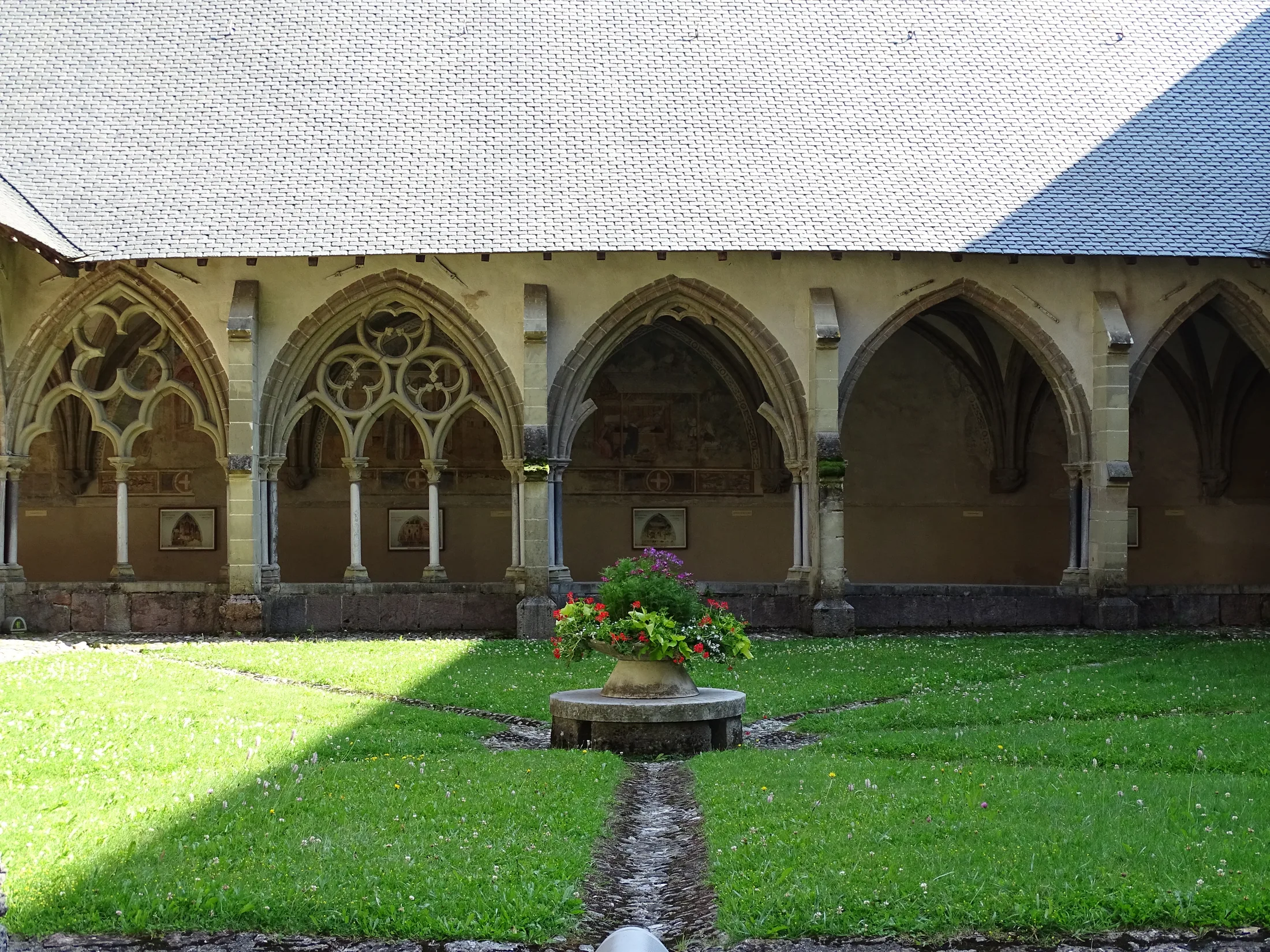
The cloister has stories on its walls.
Canons from Saint-Maurice d’Agaune arrived in 1108, beginning the abbey’s long story. In the cloister, fifteenth-century wall paintings follow the life of the Virgin Mary, scene by scene beneath the arcades.
The church brings another period into view: its nineteenth-century trompe-l’œil decoration uses painted illusion to change your reading of the architecture. Looking from the cloister to the church is a lesson in how different centuries made images work.
The buildings remain part of village life, housing the mairie and music school as well as visitor spaces. The old orchard offers a view back over the abbey, placing the art within the settlement that grew around it.
Before you go
Some areas are outside or sheltered rather than heated. Guided visits and family activities follow a programme separate from general admission hours.